
Zarathustra’s Repeated Departures
Thus Spoke ZarathustraThis flow follows the alternation between Zarathustra’s solitude, his attempts to teach, and his return to isolation.
increasing Bearing strength in each event
 decreasing
Bearing strength in each eventdecreasingThe Mountain Retreat
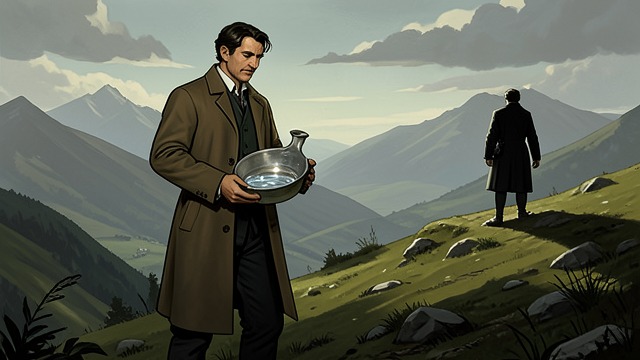
The Mountain Retreat
Wisdom gathered alone
Zarathustra has lived apart from human society, sharing his mountain existence with Zarathustra’s Eagle and Serpent. His solitude matures into abundance rather than simple withdrawal.
A need to descend
The image of an overflowing cup turns isolation into preparation. He leaves because what he has gathered demands listeners, even though he does not yet know how difficult they will be to find.
The Failed Marketplace
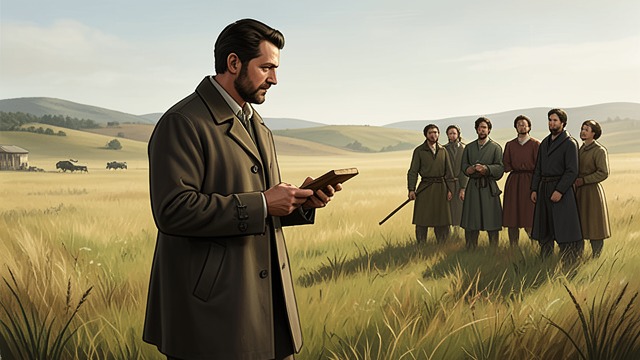
The Failed Marketplace
Public teaching
Zarathustra addresses a crowd gathered to watch a tightrope performance and announces the Superman. He expects to speak to humanity but discovers that his words meet amusement and incomprehension.
A change of audience
After the fatal fall, the crowd’s indifference clarifies his mistake. He resolves to seek companions and creators rather than attempt to convert the mass audience.
The Disciples Released

The Disciples Released
Teaching without possession
Zarathustra gives his followers a final account of creative virtue and the great noontide. He makes clear that their purpose is not to remain permanently under his authority.
The necessary separation
He tells them to lose him and find themselves. Their departure is a test of whether his teaching can produce independent creators rather than a dependent following.
The Burden of Return

The Burden of Return
A changed reception
After a long withdrawal, Zarathustra feels renewed desire to find his friends and enemies. He imagines that speech and conflict may restore contact with the world.
Solitude asserts itself
His inner command eventually overrules that impulse. The Stillest Hour tells him to speak his teaching and break, and he leaves his companions grieving and alone once more.
The Homecoming That Prepares Departure
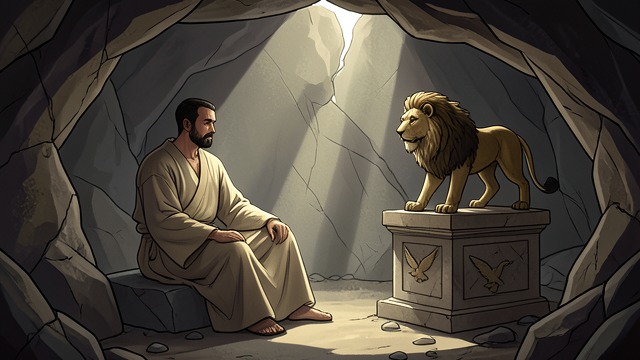
The Homecoming That Prepares Departure
A refuge restored
Zarathustra returns to his cave and addresses solitude as a familiar home. Separation from people gives him room to recover clarity and speak without disguise.
Solitude becomes temporary
The final sign of the lion and doves announces that his work is ready to move outward again. He leaves the cave at dawn, not because isolation has ended, but because it has completed this stage of preparation.
Before the book’s opening, after ten years in solitude
At the beginning of Part One
At the end of Part One
Part Two, after Zarathustra’s dream of the mirror
Part Three, after Zarathustra returns to his cave
